

Built
for Government
& Enterprise
Government agencies and enterprise organizations operate where accountability, systems. But in enterprise and public sector environments, success is defined by reliability, compliance, security, and accountability - not just features.
Talk to our Expert
The Platform Worked
During Testing.
It Failed During Reality.
A government agency launched a new digital service platform. The project passed testing. The user interface looked modern. The workflows were functional. The launch date was met. Everything seemed successful.
Then reality arrived. Thousands of citizens accessed the system simultaneously. Departments required additional approvals. Audit teams requested historical activity records. Security reviews identified governance gaps. Performance slowed during peak periods. Different departments needed different levels of access. Integration requests began arriving from multiple systems.
"The platform wasn't failing because of poor development. It was failing because it had been designed like a standard business application rather than a government-grade operational system."
The challenges facing government and enterprise organizations are fundamentally different from those of most commercial applications. Success is not measured solely by features.
Success is measured by reliability, compliance, security, accountability, scalability, and long-term sustainability.
What Does "Built for
Government &
Enterprise" Mean?
The term Built for Government & Enterprise refers to systems, platforms, and digital solutions designed specifically to operate within complex organizational environments where governance, compliance, security, and operational continuity are critical.
Unlike consumer applications, government and enterprise systems must support multiple stakeholders, complex workflows, regulatory compliance, security governance, auditability, long operational lifecycles, large user populations, and mission-critical operations.
The focus is not simply on delivering functionality.
The focus is on creating systems that continue performing reliably under real-world operational conditions.
Why Government and Enterprise
Organizations Face a Different Reality
Many software projects are designed around
convenience. Government and enterprise systems are
designed around responsibility.
Multiple Stakeholders
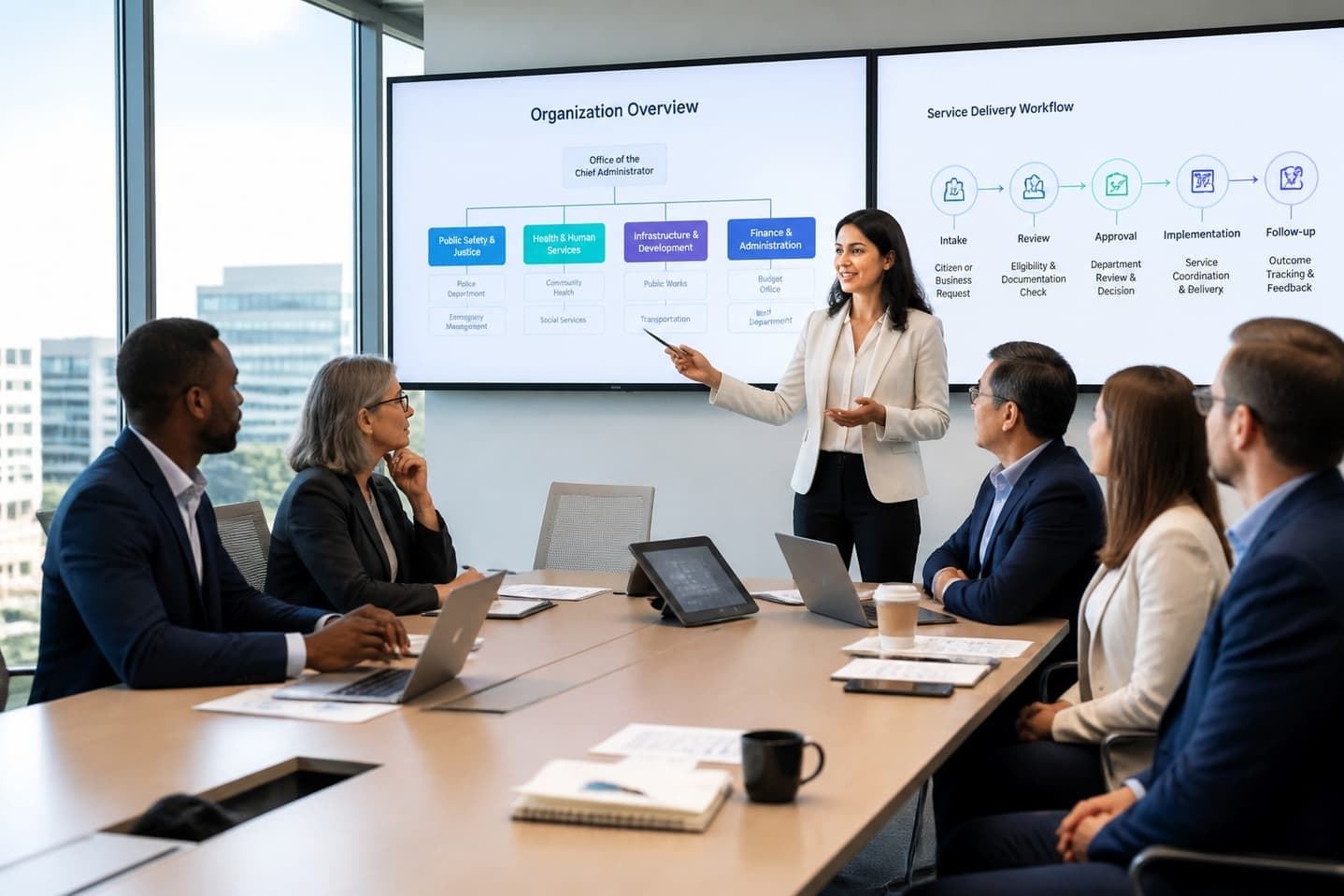
A single platform may serve executives, operational teams, compliance officers, citizens, customers, vendors, and regulators. Each group has different expectations and requirements. Balancing those needs requires structured planning and governance.
Complex Approval Processes
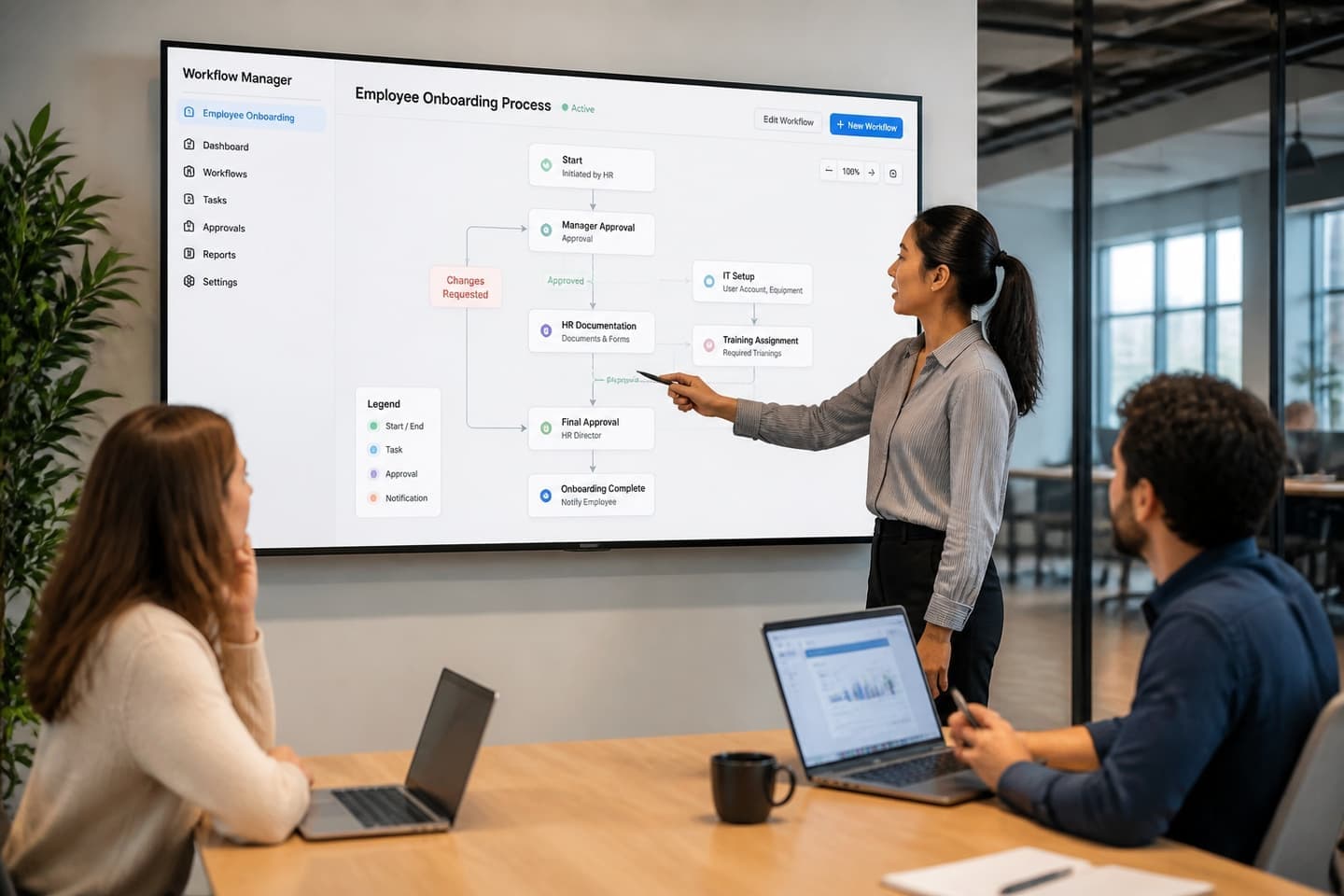
Unlike simple applications, government and enterprise environments often include multi-level approvals, workflow escalations, review processes, departmental oversight, and decision traceability. Systems must support organizational processes rather than forcing organizations to adapt to software limitations.
- • Multi-level approvals
- • Workflow escalations
- • Departmental oversight
- • Decision traceability


Why Traditional Software Approaches Often Fall Short
Security Added Too Late
Security is often treated as a testing requirement rather than an architectural requirement. This creates vulnerabilities and compliance risks.
Lack of Governance
Without governance structures, systems evolve inconsistently. Different teams make different decisions. Technical debt increases. Operational complexity grows.
Poor Auditability
Organizations struggle to answer simple questions: Who approved this action? When was the change made? What data was accessed? Which department initiated the request? Without proper audit mechanisms, accountability becomes difficult.
Scalability Challenges
Systems designed for hundreds of users may struggle when supporting thousands or millions. Performance issues often emerge after deployment rather than during development.

Many organizations view compliance as a final review process. In reality, compliance should influence architecture and design from the beginning.
For government and enterprise organizations, compliance often becomes a competitive and operational advantage.




Security by Design Is No
Longer Optional
Cybersecurity threats continue to increase. Security must extend beyond passwords and authentication. When security is built into the foundation of a system, organizations reduce exposure to future threats.
ORGANIZATIONS FACE RISKS FROM:
- Unauthorized access
- Data breaches
- Insider threats
- Third-party vulnerabilities
- Regulatory penalties
Modern government and enterprise systems require a comprehensive security architecture that is built in from the start.
Identity Management
Role-Based Access Controls
Audit Logging
Data Protection
Continuous Monitoring
Risk Management Frameworks
Why Auditability Is Essential
for Enterprise Operations
Many organizations underestimate the importance of auditability until a problem occurs. When issues arise, leaders often need answers immediately.
Auditability provides transparency, accountability, and operational confidence. It is a critical requirement for both government and enterprise environments.
Without structured audit capabilities, investigations become difficult and time-consuming. Complete traceability is non-negotiable.
Scalability Is About More Than Traffic
Many businesses assume scalability only relates to
user volume. In reality, enterprise scalability includes
four critical dimensions.
Organizational Growth
Supporting new departments, teams, and business units as the organization evolves.
Workflow Expansion
Managing increasingly complex operational processes without performance degradation.
Integration Growth
Connecting with additional systems, services, and partners as needs emerge.
Data Growth
Handling expanding datasets while maintaining performance and compliance.
When government agencies and
enterprise leaders evaluate digital
solutions, their priorities extend beyond
functionality.
These concerns reflect the realities of managing large-scale organizations. Technology must support long-term objectives rather than short-term convenience.

Signs Your Organization Needs a Government &
Enterprise-Focused Approach
Multiple Departments Depend on the Same System
Shared platforms require governance and accountability.
Regulatory Compliance Is Critical
Healthcare, finance, insurance, education, and government sectors frequently face strict regulatory obligations.
Downtime Has Significant Consequences
Operational disruptions can affect citizens, customers, revenue, and organizational reputation.
Security Risks Are Increasing
Sensitive information requires stronger controls and oversight.
Long-Term Sustainability Matters
Systems expected to operate for years require strategic architectural planning.
Frequently Asked Questions
What does Built for Government & Enterprise mean?
It refers to systems designed specifically for environments requiring governance, compliance, security, auditability, scalability, and operational reliability.
Why are government and enterprise systems different from standard business applications?
They typically support larger user bases, more stakeholders, stricter regulations, longer lifecycles, and greater operational complexity.
Why is compliance important in enterprise systems?
Compliance helps organizations meet legal, regulatory, security, and operational obligations while reducing risk.
What is the biggest challenge in government and enterprise software development?
Balancing functionality, security, governance, scalability, and long-term maintainability simultaneously.
Which industries benefit most from enterprise-focused engineering?
Government, healthcare, finance, insurance, logistics, manufacturing, education, utilities, and large-scale enterprise organizations commonly require these capabilities.
Technology is easy to build. Reliable, secure, compliant,
and scalable systems are much harder.
Success is Measured by
Trust.
Government agencies and enterprise organizations operate in environments where accountability, governance, and operational continuity matter every day. The concept of being Built for Government & Enterprise is not about adding more features.
It is about designing systems capable of supporting complex organizations, evolving regulations, growing user demands, and mission-critical operations over the long term. Because when systems support essential services, success is measured by more than functionality. It is measured by trust - built through reliability, security, compliance, and operational excellence from the very beginning.
Start the Conversation